Buy leadgeneration.eu ?
We are moving the project
leadgeneration.eu .
Are you interested in purchasing the domain
leadgeneration.eu ?
domain@kv-gmbh.de · 0541-91531010
Buy leadgeneration.eu ?
Do all evolutionary factors have to act in synthetic evolutionary theory?
In synthetic evolutionary theory, not all evolutionary factors have to act in isolation. Instead, the theory emphasizes the interaction and integration of multiple factors, such as genetic variation, natural selection, genetic drift, and gene flow, in shaping the evolutionary process. This approach recognizes that evolution is a complex and multifaceted phenomenon, and that the combined effects of these factors can lead to the emergence of new traits and species. By considering the interactions among these factors, synthetic evolutionary theory provides a more comprehensive understanding of the evolutionary process. **
What is an evolutionary brake?
An evolutionary brake refers to a factor or mechanism that slows down or limits the rate of evolution within a population or species. This can include environmental factors, such as limited resources or harsh conditions, that restrict the ability of individuals with certain traits to survive and reproduce. Additionally, genetic factors, such as mutations that are detrimental to an organism's survival or reproduction, can act as evolutionary brakes by preventing those traits from becoming more common in a population. Overall, evolutionary brakes help to maintain genetic diversity and prevent rapid and potentially harmful changes in a population. **

Similar search terms for Evolutionary
Top-Angebote
Products related to Evolutionary:
-
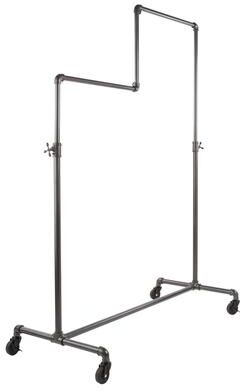
Econoco Vintage Pipeline Adjustable Rolling Garment Rack"42"" wide Hangrail - Adjusts from 44"" - 72"" in height. Base: 42-1/2""W x 23-3/8""D. Constructed of heavy duty 1 1/4"" diameter plumbing pipe in anthracite grey finish. Includes four 3"" casters, 2 locking, 2 non-locking."277,99 $*Shipping: 0,00 $Secure redirect to the provider
-
Econoco Pipeline Adjustable 2 Way Cross Bar Rack"Adjusts from 44"" - 72"" in height. Base: 21""W x 21""D with 13"" Faceouts. Constructed of heavy duty 1 1/4"" diameter plumbing pipe in anthracite grey finish. Includes four 2"" casters, 2 locking, 2 non-locking. The Pipeline collection is a uniquely..."236,99 $*Shipping: 0,00 $Secure redirect to the provider



-
Is love of evolutionary origin?
Yes, the concept of love is believed to have evolutionary origins. Evolutionary psychologists suggest that love developed as a mechanism to promote bonding and cooperation between individuals, which increased the chances of survival and reproduction. The feelings of attachment, care, and protection associated with love are thought to have evolved to ensure the successful raising of offspring. Therefore, love is considered to have evolved as an adaptive trait that has persisted over time due to its benefits for human survival and reproduction. **
-
Do blood types have evolutionary advantages?
Yes, blood types are believed to have evolutionary advantages. For example, the ABO blood group system is thought to have evolved as a way to protect against certain diseases. Individuals with type O blood are less susceptible to severe malaria, while those with type A blood may have a higher risk of developing certain types of cancer. Additionally, the Rh factor in blood types is thought to have evolved as a way to protect against certain infections. Overall, blood types are believed to have evolved as a way to provide some level of protection against various diseases and infections. **
-
Are there evolutionary reasons for ADHD?
There is evidence to suggest that there may be evolutionary reasons for ADHD. Some researchers propose that the traits associated with ADHD, such as impulsivity and hyperactivity, may have been advantageous in certain ancestral environments. For example, individuals with ADHD traits may have been better suited for tasks that required quick decision-making and action, such as hunting or gathering. However, in modern society, these traits can be disruptive and impairing, leading to the diagnosis of ADHD. Further research is needed to fully understand the evolutionary origins of ADHD. **
-
What are evolutionary directions in biology?
Evolutionary directions in biology refer to the changes and adaptations that occur in living organisms over time. These changes can include the development of new traits, behaviors, or structures that help organisms better survive and reproduce in their environment. Evolutionary directions can also involve the branching out of new species from a common ancestor, leading to the diversity of life we see today. By studying these evolutionary directions, scientists can gain insights into the history and relationships of different species, as well as how organisms may continue to evolve in the future. **


What is the evolutionary factor selection?
Evolution by natural selection is the process by which organisms with advantageous traits are more likely to survive, reproduce, and pass on those traits to their offspring. This leads to the gradual accumulation of beneficial traits in a population over generations, resulting in the adaptation of organisms to their environment. The key components of natural selection are variation in traits, heritability of those traits, and differential reproductive success based on those traits. Ultimately, natural selection is the driving force behind the diversity of life on Earth. **
Can one force an evolutionary change?
Evolutionary change occurs over long periods of time through natural selection, genetic mutation, and other factors. It is not possible to force an evolutionary change in a specific direction or within a short period of time. However, humans have influenced the evolution of certain species through selective breeding and genetic engineering. These interventions can lead to changes in the genetic makeup of a population, but they are not considered natural evolutionary processes. Overall, while humans can influence the genetic makeup of a population, they cannot force an evolutionary change in the traditional sense. **
Top-Angebote
Products related to Evolutionary:
-
L'Oreal 16 oz Mega Moisture Nurturing Creme 16 OzL'Oreal's Mega Moisture Nurturing Creme unique formula tames unruly hair with intense moisture, making it flexible, easy to manage and able to hold your style in place. It can be used for everyday conditioning or even longer, deep conditioning,...24,19 $*Shipping: 0,00 $Secure redirect to the provider
-
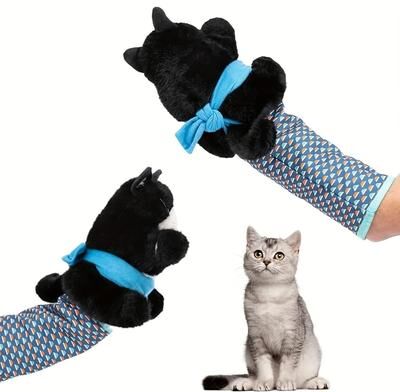
Uplifted Finds Predatory Engagement Wrestling Puppet Hub Predatory Engagement Wrestling Puppet HubTransform interactive play with the PredatoryEngagement Puppet, a professionalgrade interaction module engineered with manualsimulation logic. This highutility tool features a reinforced plush architecture and poseable limbs, specifically designed...85,97 $*Shipping: 0,00 $Secure redirect to the provider
-
Econoco Vintage Pipeline Adjustable Rolling Garment Rack"42"" wide Hangrail - Adjusts from 44"" - 72"" in height. Base: 42-1/2""W x 23-3/8""D. Constructed of heavy duty 1 1/4"" diameter plumbing pipe in anthracite grey finish. Includes four 3"" casters, 2 locking, 2 non-locking."277,99 $*Shipping: 0,00 $Secure redirect to the provider
-
Do all evolutionary factors have to act in synthetic evolutionary theory?
In synthetic evolutionary theory, not all evolutionary factors have to act in isolation. Instead, the theory emphasizes the interaction and integration of multiple factors, such as genetic variation, natural selection, genetic drift, and gene flow, in shaping the evolutionary process. This approach recognizes that evolution is a complex and multifaceted phenomenon, and that the combined effects of these factors can lead to the emergence of new traits and species. By considering the interactions among these factors, synthetic evolutionary theory provides a more comprehensive understanding of the evolutionary process. **
-
What is an evolutionary brake?
An evolutionary brake refers to a factor or mechanism that slows down or limits the rate of evolution within a population or species. This can include environmental factors, such as limited resources or harsh conditions, that restrict the ability of individuals with certain traits to survive and reproduce. Additionally, genetic factors, such as mutations that are detrimental to an organism's survival or reproduction, can act as evolutionary brakes by preventing those traits from becoming more common in a population. Overall, evolutionary brakes help to maintain genetic diversity and prevent rapid and potentially harmful changes in a population. **
-
Is love of evolutionary origin?
Yes, the concept of love is believed to have evolutionary origins. Evolutionary psychologists suggest that love developed as a mechanism to promote bonding and cooperation between individuals, which increased the chances of survival and reproduction. The feelings of attachment, care, and protection associated with love are thought to have evolved to ensure the successful raising of offspring. Therefore, love is considered to have evolved as an adaptive trait that has persisted over time due to its benefits for human survival and reproduction. **
-
Do blood types have evolutionary advantages?
Yes, blood types are believed to have evolutionary advantages. For example, the ABO blood group system is thought to have evolved as a way to protect against certain diseases. Individuals with type O blood are less susceptible to severe malaria, while those with type A blood may have a higher risk of developing certain types of cancer. Additionally, the Rh factor in blood types is thought to have evolved as a way to protect against certain infections. Overall, blood types are believed to have evolved as a way to provide some level of protection against various diseases and infections. **
Similar search terms for Evolutionary
-
Econoco Pipeline Adjustable 2 Way Cross Bar Rack"Adjusts from 44"" - 72"" in height. Base: 21""W x 21""D with 13"" Faceouts. Constructed of heavy duty 1 1/4"" diameter plumbing pipe in anthracite grey finish. Includes four 2"" casters, 2 locking, 2 non-locking. The Pipeline collection is a uniquely..."236,99 $*Shipping: 0,00 $Secure redirect to the provider
-
John Blake Peaky Blinders: The Legacy - The real story of Britains most notorious 1920s gangs: The follow-up to the Sunday Times BestsellerThe Peaky Blinders as we know them, thanks to the hit TV series, are infused with drama and dread. Fashionably dressed, the charismatic but deeply flawed Shelby family have become cult anti-heroes. Well-known social historian, broadcaster and author, Carl Chinn, revealed the true story of the notorious gang in his bestselling Peaky Blinders: The Real Story and now in this follow-up book, he explores the legacy they created in Birmingham and beyond. What happened to them and their gangland rivals? In Peaky Blinders: The Legacy we revisit the world of Billy Kimber's Peaky Blinders, exploring their legacy throughout the 1920s and 30s, and how their burgeoning empires spread across the UK. Delve into the street wars across the country, the impact of the declaration of War on Gangs by the Home Secretary after The Racecourse War in 1921, and how the blackmailing of bookmakers gave way to new and daring opportunities for the likes of Sabini, Alfie Solomon and some new faces in the murky gangland underworld. Drawing on Carl's inimitable research, interviews and original sources, find out just what happened to this incredible cast of characters, revealing the true legacy of the Peaky Blinders.3,99 £*Shipping: 1,99 £Secure redirect to the provider
-
Econoco Pipeline Adjustable Double Bar Box Rack, Anthracite Grey"Base dimensions measure 48""L x 22""W. Hangrails measure approximately 60"" long and have a 1"" dia. Double hangrails adjust independently from approximately 53-1/2""H to 80""H. Base is constructed of 1-1/4"" dia. pipe."367,91 $*Shipping: 0,00 $Secure redirect to the provider
-
Are there evolutionary reasons for ADHD?
There is evidence to suggest that there may be evolutionary reasons for ADHD. Some researchers propose that the traits associated with ADHD, such as impulsivity and hyperactivity, may have been advantageous in certain ancestral environments. For example, individuals with ADHD traits may have been better suited for tasks that required quick decision-making and action, such as hunting or gathering. However, in modern society, these traits can be disruptive and impairing, leading to the diagnosis of ADHD. Further research is needed to fully understand the evolutionary origins of ADHD. **
-
What are evolutionary directions in biology?
Evolutionary directions in biology refer to the changes and adaptations that occur in living organisms over time. These changes can include the development of new traits, behaviors, or structures that help organisms better survive and reproduce in their environment. Evolutionary directions can also involve the branching out of new species from a common ancestor, leading to the diversity of life we see today. By studying these evolutionary directions, scientists can gain insights into the history and relationships of different species, as well as how organisms may continue to evolve in the future. **
-
What is the evolutionary factor selection?
Evolution by natural selection is the process by which organisms with advantageous traits are more likely to survive, reproduce, and pass on those traits to their offspring. This leads to the gradual accumulation of beneficial traits in a population over generations, resulting in the adaptation of organisms to their environment. The key components of natural selection are variation in traits, heritability of those traits, and differential reproductive success based on those traits. Ultimately, natural selection is the driving force behind the diversity of life on Earth. **
-
Can one force an evolutionary change?
Evolutionary change occurs over long periods of time through natural selection, genetic mutation, and other factors. It is not possible to force an evolutionary change in a specific direction or within a short period of time. However, humans have influenced the evolution of certain species through selective breeding and genetic engineering. These interventions can lead to changes in the genetic makeup of a population, but they are not considered natural evolutionary processes. Overall, while humans can influence the genetic makeup of a population, they cannot force an evolutionary change in the traditional sense. **
* All prices are inclusive of VAT and, if applicable, plus shipping costs. The offer information is based on the details provided by the respective shop and is updated through automated processes. Real-time updates do not occur, so deviations can occur in individual cases. ** Note: Parts of this content were created by AI.