Buy leadgeneration.eu ?
We are moving the project
leadgeneration.eu .
Are you interested in purchasing the domain
leadgeneration.eu ?
domain@kv-gmbh.de · 0541-91531010
Buy leadgeneration.eu ?
How is a biomembrane structured?
A biomembrane is structured as a phospholipid bilayer, with the hydrophilic (water-attracting) phosphate heads facing outward and the hydrophobic (water-repelling) fatty acid tails facing inward. This bilayer forms a barrier that separates the inside and outside of the cell, controlling the movement of molecules in and out of the cell. The membrane also contains proteins, cholesterol, and carbohydrates that are embedded within or attached to the phospholipid bilayer, contributing to its structure and function. This structure allows the biomembrane to be selectively permeable, regulating the passage of substances into and out of the cell. **
How is a biomembrane labeled?
A biomembrane can be labeled using various techniques such as fluorescent dyes, radioactive isotopes, or specific antibodies. Fluorescent dyes can be used to directly label the biomembrane, allowing for visualization under a fluorescence microscope. Radioactive isotopes can be incorporated into the membrane components and detected using autoradiography. Specific antibodies can also be used to target and label specific proteins or lipids within the biomembrane, allowing for precise localization and identification of membrane components. Each labeling technique has its advantages and limitations, and the choice of method depends on the specific research question and experimental requirements. **


Similar search terms for Biomembrane
Top-Angebote
Products related to Biomembrane:
-
David Beckham Follow Your Instinct EDP M 50 mlDavid Beckham Follow Your Instinct, 50 ml, Eaux de Parfum for Men, New day – new opportunity to tackle more challenges. David Beckham Follow Your Instinct Eau de Parfum for men will refresh your mind so that you can boldly follow your instinct. Embrace your everyday adventures! citrus fragrance woody fragrance ideal choice for a brave adventurer suitable for everyday wear14,64 £*Shipping: 3,99 £Secure redirect to the provider
-
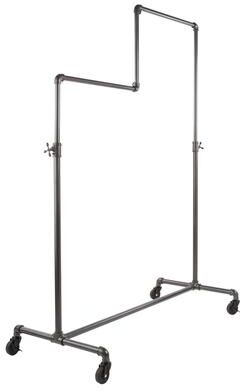
Econoco Vintage Pipeline Adjustable Rolling Garment Rack"42"" wide Hangrail - Adjusts from 44"" - 72"" in height. Base: 42-1/2""W x 23-3/8""D. Constructed of heavy duty 1 1/4"" diameter plumbing pipe in anthracite grey finish. Includes four 3"" casters, 2 locking, 2 non-locking."277,99 $*Shipping: 0,00 $Secure redirect to the provider
-
Nobilis Tilia Obličejový olej Růžový nurturing oil with rose oil 20 mlNobilis Tilia Obličejový olej Růžový, 20 ml, Face oils for Women, Does it feel as though your skin needs something more than just the care provided by a cream? The Nobilis Tilia Obličejový olej Růžový facial oil is the perfect product to enrich your skincare routine – it gives the skin an extra dose of nourishment and also softens it. Characteristics: regenerates and moisturises restores skin elasticity nourishes deeply regenerates the skin barrier Ingredients: vegan product rose oil – locks in water to keep skin hydrated, nourishes, promotes a youthful appearance and skin elasticity, helps smooth wrinkles, softens, harmonizes and promotes regeneration jojoba oil – keeps skin intensely hydrated, provides antioxidant protection, counteracts irritation and dryness, helps regulate sebum production and promotes regeneration almond oil – nourishes, helps lock water in skin and keep it hydrated, softens rough textures and uneven skin, helps prevent flaking and irritation vitamin E – nourishes, provides antioxidant protection against premature ageing and damage caused by free radicals, helps smooth wrinkles and restore skin firmness and elasticity squalane - locks water in skin by forming a protective layer on its surface, hydrates, softens and smooths, helps regulate sebum production, thanks to its strong antioxidant effects it also contributes to a balanced skin tone How to use: Massage a small amount of oil into clean skin on your face and leave to become absorbed. Use every morning and/or evening.14,30 £*Shipping: 3,99 £Secure redirect to the provider


-
Can water pass through a biomembrane?
Yes, water can pass through a biomembrane. Biomembranes are selectively permeable, meaning they allow certain substances, including water, to pass through while restricting the movement of others. Water can pass through biomembranes via a process called osmosis, where it moves from an area of high concentration to an area of low concentration to maintain equilibrium. This movement of water through biomembranes is essential for various cellular processes and maintaining proper hydration levels in organisms. **
-
What is the function of a biomembrane?
The function of a biomembrane is to act as a barrier that separates the interior of a cell from its external environment, allowing the cell to maintain its internal environment and regulate the exchange of molecules with the outside. It also plays a crucial role in communication and signaling between cells, as well as in the transport of molecules in and out of the cell. Additionally, biomembranes provide structural support and organization to the cell, helping to maintain its shape and integrity. **
-
What is the structure of a biomembrane?
A biomembrane is composed of a phospholipid bilayer with embedded proteins. The phospholipid bilayer consists of two layers of phospholipid molecules, with hydrophilic heads facing outward and hydrophobic tails facing inward. The proteins within the membrane can be integral, spanning the entire bilayer, or peripheral, attached to one side of the membrane. This structure provides the biomembrane with selective permeability, allowing it to regulate the passage of molecules in and out of the cell. **
-
What are the hexagons on the biomembrane?
The hexagons on the biomembrane are typically representations of the phospholipid molecules that make up the membrane. Phospholipids have a hydrophilic (water-attracting) head and two hydrophobic (water-repelling) tails, which arrange themselves in a bilayer structure. This bilayer forms the basic structure of the biomembrane, with the hydrophilic heads facing the aqueous environment and the hydrophobic tails facing inward. The hexagonal shape is often used to depict this arrangement of phospholipids in the membrane. **


What is active transport in the biomembrane?
Active transport in the biomembrane is a process that requires energy to move molecules or ions across the membrane against their concentration gradient. This process is carried out by specific proteins called pumps or transporters that use energy, usually in the form of ATP, to actively transport molecules or ions from an area of low concentration to an area of high concentration. Active transport is essential for maintaining proper ion concentrations inside and outside the cell, as well as for transporting nutrients into the cell and removing waste products. **
What is the sandwich model of the biomembrane?
The sandwich model of the biomembrane describes the structure of cell membranes as a bilayer of phospholipid molecules. In this model, the hydrophilic (water-attracting) heads of the phospholipids are oriented towards the outside of the membrane, while the hydrophobic (water-repelling) tails are oriented towards the inside, creating a barrier that separates the internal and external environments of the cell. This model also includes various proteins and cholesterol molecules that are embedded within the lipid bilayer, contributing to the membrane's structure and function. **
Top-Angebote
Products related to Biomembrane:
-
Uplifted Finds Predatory Engagement Wrestling Puppet Hub Predatory Engagement Wrestling Puppet HubTransform interactive play with the PredatoryEngagement Puppet, a professionalgrade interaction module engineered with manualsimulation logic. This highutility tool features a reinforced plush architecture and poseable limbs, specifically designed...85,97 $*Shipping: 0,00 $Secure redirect to the provider
-
L'Oreal 16 oz Mega Moisture Nurturing Creme 16 OzL'Oreal's Mega Moisture Nurturing Creme unique formula tames unruly hair with intense moisture, making it flexible, easy to manage and able to hold your style in place. It can be used for everyday conditioning or even longer, deep conditioning,...24,19 $*Shipping: 0,00 $Secure redirect to the provider
-
David Beckham Follow Your Instinct EDP M 50 mlDavid Beckham Follow Your Instinct, 50 ml, Eaux de Parfum for Men, New day – new opportunity to tackle more challenges. David Beckham Follow Your Instinct Eau de Parfum for men will refresh your mind so that you can boldly follow your instinct. Embrace your everyday adventures! citrus fragrance woody fragrance ideal choice for a brave adventurer suitable for everyday wear14,64 £*Shipping: 3,99 £Secure redirect to the provider
-
Econoco Vintage Pipeline Adjustable Rolling Garment Rack"42"" wide Hangrail - Adjusts from 44"" - 72"" in height. Base: 42-1/2""W x 23-3/8""D. Constructed of heavy duty 1 1/4"" diameter plumbing pipe in anthracite grey finish. Includes four 3"" casters, 2 locking, 2 non-locking."277,99 $*Shipping: 0,00 $Secure redirect to the provider
-
How is a biomembrane structured?
A biomembrane is structured as a phospholipid bilayer, with the hydrophilic (water-attracting) phosphate heads facing outward and the hydrophobic (water-repelling) fatty acid tails facing inward. This bilayer forms a barrier that separates the inside and outside of the cell, controlling the movement of molecules in and out of the cell. The membrane also contains proteins, cholesterol, and carbohydrates that are embedded within or attached to the phospholipid bilayer, contributing to its structure and function. This structure allows the biomembrane to be selectively permeable, regulating the passage of substances into and out of the cell. **
-
How is a biomembrane labeled?
A biomembrane can be labeled using various techniques such as fluorescent dyes, radioactive isotopes, or specific antibodies. Fluorescent dyes can be used to directly label the biomembrane, allowing for visualization under a fluorescence microscope. Radioactive isotopes can be incorporated into the membrane components and detected using autoradiography. Specific antibodies can also be used to target and label specific proteins or lipids within the biomembrane, allowing for precise localization and identification of membrane components. Each labeling technique has its advantages and limitations, and the choice of method depends on the specific research question and experimental requirements. **
-
Can water pass through a biomembrane?
Yes, water can pass through a biomembrane. Biomembranes are selectively permeable, meaning they allow certain substances, including water, to pass through while restricting the movement of others. Water can pass through biomembranes via a process called osmosis, where it moves from an area of high concentration to an area of low concentration to maintain equilibrium. This movement of water through biomembranes is essential for various cellular processes and maintaining proper hydration levels in organisms. **
-
What is the function of a biomembrane?
The function of a biomembrane is to act as a barrier that separates the interior of a cell from its external environment, allowing the cell to maintain its internal environment and regulate the exchange of molecules with the outside. It also plays a crucial role in communication and signaling between cells, as well as in the transport of molecules in and out of the cell. Additionally, biomembranes provide structural support and organization to the cell, helping to maintain its shape and integrity. **
Similar search terms for Biomembrane
-
Nobilis Tilia Obličejový olej Růžový nurturing oil with rose oil 20 mlNobilis Tilia Obličejový olej Růžový, 20 ml, Face oils for Women, Does it feel as though your skin needs something more than just the care provided by a cream? The Nobilis Tilia Obličejový olej Růžový facial oil is the perfect product to enrich your skincare routine – it gives the skin an extra dose of nourishment and also softens it. Characteristics: regenerates and moisturises restores skin elasticity nourishes deeply regenerates the skin barrier Ingredients: vegan product rose oil – locks in water to keep skin hydrated, nourishes, promotes a youthful appearance and skin elasticity, helps smooth wrinkles, softens, harmonizes and promotes regeneration jojoba oil – keeps skin intensely hydrated, provides antioxidant protection, counteracts irritation and dryness, helps regulate sebum production and promotes regeneration almond oil – nourishes, helps lock water in skin and keep it hydrated, softens rough textures and uneven skin, helps prevent flaking and irritation vitamin E – nourishes, provides antioxidant protection against premature ageing and damage caused by free radicals, helps smooth wrinkles and restore skin firmness and elasticity squalane - locks water in skin by forming a protective layer on its surface, hydrates, softens and smooths, helps regulate sebum production, thanks to its strong antioxidant effects it also contributes to a balanced skin tone How to use: Massage a small amount of oil into clean skin on your face and leave to become absorbed. Use every morning and/or evening.14,30 £*Shipping: 3,99 £Secure redirect to the provider
-
Econoco Pipeline Adjustable 2 Way Cross Bar Rack"Adjusts from 44"" - 72"" in height. Base: 21""W x 21""D with 13"" Faceouts. Constructed of heavy duty 1 1/4"" diameter plumbing pipe in anthracite grey finish. Includes four 2"" casters, 2 locking, 2 non-locking. The Pipeline collection is a uniquely..."236,99 $*Shipping: 0,00 $Secure redirect to the provider
-
What is the structure of a biomembrane?
A biomembrane is composed of a phospholipid bilayer with embedded proteins. The phospholipid bilayer consists of two layers of phospholipid molecules, with hydrophilic heads facing outward and hydrophobic tails facing inward. The proteins within the membrane can be integral, spanning the entire bilayer, or peripheral, attached to one side of the membrane. This structure provides the biomembrane with selective permeability, allowing it to regulate the passage of molecules in and out of the cell. **
-
What are the hexagons on the biomembrane?
The hexagons on the biomembrane are typically representations of the phospholipid molecules that make up the membrane. Phospholipids have a hydrophilic (water-attracting) head and two hydrophobic (water-repelling) tails, which arrange themselves in a bilayer structure. This bilayer forms the basic structure of the biomembrane, with the hydrophilic heads facing the aqueous environment and the hydrophobic tails facing inward. The hexagonal shape is often used to depict this arrangement of phospholipids in the membrane. **
-
What is active transport in the biomembrane?
Active transport in the biomembrane is a process that requires energy to move molecules or ions across the membrane against their concentration gradient. This process is carried out by specific proteins called pumps or transporters that use energy, usually in the form of ATP, to actively transport molecules or ions from an area of low concentration to an area of high concentration. Active transport is essential for maintaining proper ion concentrations inside and outside the cell, as well as for transporting nutrients into the cell and removing waste products. **
-
What is the sandwich model of the biomembrane?
The sandwich model of the biomembrane describes the structure of cell membranes as a bilayer of phospholipid molecules. In this model, the hydrophilic (water-attracting) heads of the phospholipids are oriented towards the outside of the membrane, while the hydrophobic (water-repelling) tails are oriented towards the inside, creating a barrier that separates the internal and external environments of the cell. This model also includes various proteins and cholesterol molecules that are embedded within the lipid bilayer, contributing to the membrane's structure and function. **
* All prices are inclusive of VAT and, if applicable, plus shipping costs. The offer information is based on the details provided by the respective shop and is updated through automated processes. Real-time updates do not occur, so deviations can occur in individual cases. ** Note: Parts of this content were created by AI.